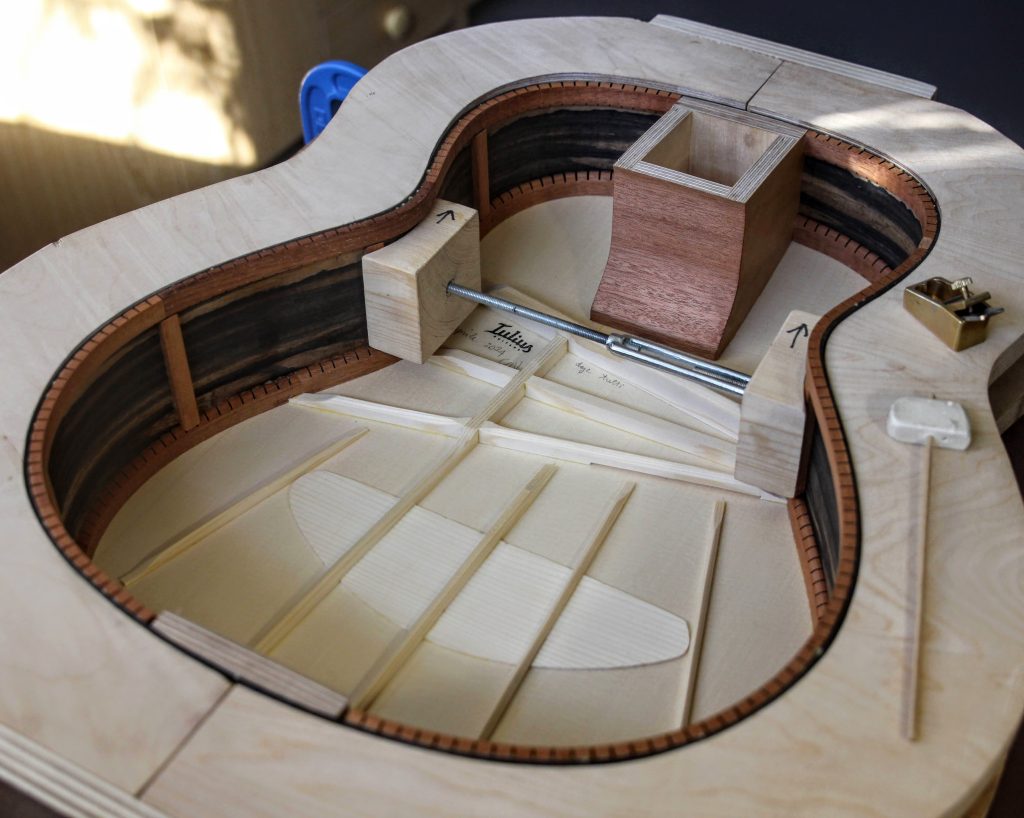
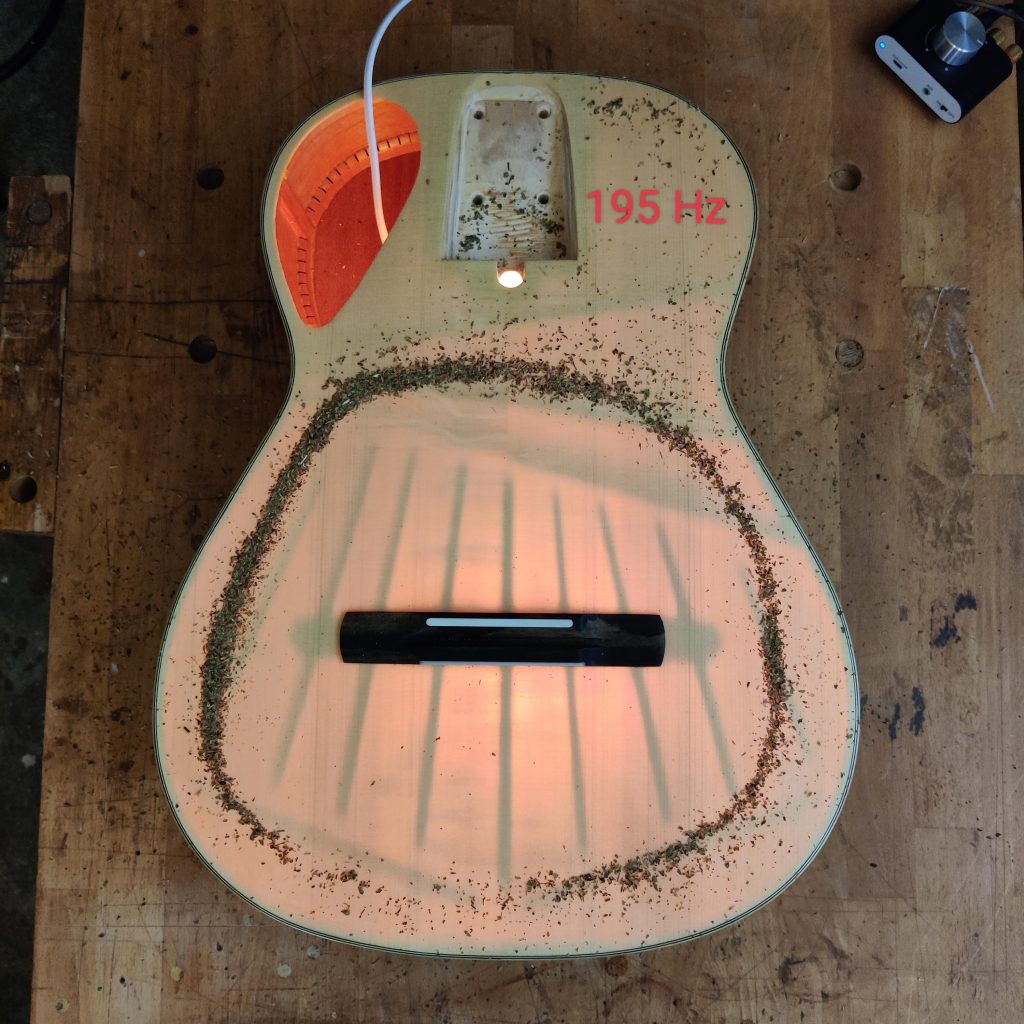
I approach the acoustic guitar as a predictable, coupled resonant system, applying my background in electroacoustic engineering to define the instrument’s behavior during the design phase. By engineering how structural elements interact, I ensure the system naturally converges toward a specific acoustic goal, bringing technical clarity to the traditional craft of lutherie.
Intentional Acoustic Design
This work builds on tradition while adding an intentional layer: define the desired behaviour early, then shape the instrument so its response follows that intention naturally as a complete, coupled system. The result is an immediate, stable connection with the instrument: notes stay balanced across registers, the response remains predictable, and the guitar fully supports musical intent so the musician can focus on phrasing, dynamics and expression instead of compensation.
Innovation with Purpose
Innovation is not about adding features. It is about solving specific acoustic or structural problems and allows to the instrument to behave like a coherent system that deliver immediate connection with the musician.
The solutions developed through this approach are presented in the Innovations section.
A Language for Modern Luthiery
This approach is part of a broader body of research and practice in contemporary lutherie and musical acoustics. I have engaged in this work through building, research, and teaching, applying shared tools and concepts to understand and evaluate how instruments behave. These ideas are presented in the book Mastering the sound of the acoustic guitar, and explored further through workshops and consulting acitivities focused on guitar design and evaluation.
Why It Takes Time
Intentional Design is a deliberate process. Each instrument requires verification and adjustment throughout the build. Because a guitar only exists acoustically once it is under tension, this approach includes rigorous calibration after assembly and setup. It is at this stage that intention and result are checked against one another.
Time is a component of the process; it is required for the consistency and balance that defines a Iulius Guitar.